[Article] Copyrightability of two-dimensional patterns — Appeal in the Futon Pattern case (李遠杰, Intellectual Property Law and Policy Journal, Vol. 69, 2024)
更新日:1 日前
Article information
Article type: Publication review
Category: Copyright
Topics: Copyrightability, Applied art
First published on this website: 2026-10-16
Display and classification checked: October 17, 2026
[Article] Copyrightability of two-dimensional patterns — Appeal in the Futon Pattern case (李遠杰, Intellectual Property Law and Policy Journal, Vol. 69, 2024)
These three cases all denied copyrightability of utilitarian articles bearing two-dimensional patterns:
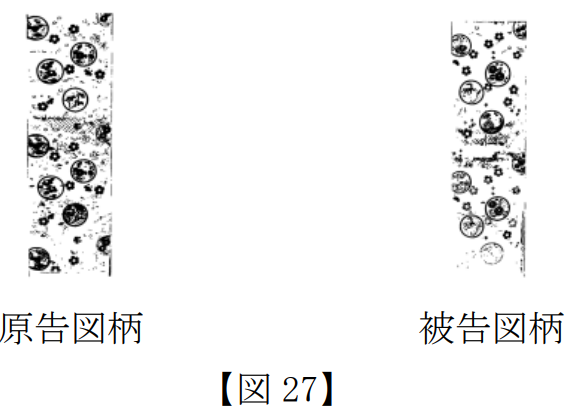
• Futon Pattern — Osaka High Court, Reiwa 4 (Ne) No. 745
• Saga Nishiki Fukuro-Obi — Kyoto District Court, Showa 60 (Wa) No. 1737
• Chamois — Osaka District Court, Heisei 27 (Wa) No. 9648
In Katsunuma Chateau (IP High Court, Heisei 25 (Ne) No. 10057), copyrightability of a picture on a signboard was denied.
Type 1: Simple patterns combining short text or basic geometric shapes. Copyrightability is often denied.
Type 2: Patterns containing elements depicting real objects with some abstraction. Copyrightability is often recognized.
Type 3: Patterns containing relatively detailed depictions of real objects. Copyrightability is strongly affirmed.
The article proposes a framework for assessing two-dimensional patterns through these three categories and compares its consistency with earlier decisions.
[My comments — Hideki Takaishi]
There are, however, many exceptions; the basis for classification may require further study.
Copyright was also denied in the Clock Original Drawing case (Osaka District Court, June 24, 2021). Recognition may be harder when a picture is created for a practical use.
By contrast, copyrightability was affirmed in two T-shirt Illustration cases (Tokyo District Court, April 20, 1981, and September 29, 2023), because the illustrations were not constrained by the practical purpose of printing them on T-shirts.
Might the result here have differed if the pattern had been created as a painting, rather than for a futon from the outset, and then used as a futon pattern after being presented as a painting? In this case, it had been drawn specifically as a futon pattern from the beginning.
Original AMEBLO article (2025-04-15)
English translations of the original image text

Original images retained for comparison



Related articles
Update history
The first-published date remains unchanged. Display maintenance, classification changes, related-article updates, and text corrections are recorded separately.
October 16, 2026: First published on this website.
October 17, 2026: Added article information, classification, topics, language navigation, consultation guidance, and update history; the original text and first-published date were preserved.


